The
woman in black opening sequence
The first shot the audience
is introduced to is an unseen character gracefully pouring the imaginary tea
from a children’s toy china teapot in to a toy tea cup through the use of a
close up this suggests to the audience that it is a young girl as she is
elegant with her actions, this is stereotypical for a young girl. The Young
girls are conforming to traditional stereotypes by being represented as vulnerable
and usually play the victims, which is conventional to a horror film, for example
mama which also uses young females. This indicates to the audience children are
an important role in the film. The tea set is shown to have a bird printed on
it, which symbolizes the innocence of the children and also foreshadows the
girls later jumping out of the window as if like a flying bird. The blue bird
on the teapot has a symbolic meaning of happiness, which juxtaposes the
following shots.
The non-diegetic sound of a
children’s music box which adds a calm yet spooky feeling to the scene. This
could also represent the famous olden time children’s toy ‘a jack in the box’
where something jumps out to foreshadow the children later jumping out of the
window, this brings the feeling of wickedness to the film, that there is
something or someone wicked. This music starts at a quiet sound and gradually
gets louder as the children walk toward the window to jump out. This is to
create suspense and emphasise the death of the children. This is effective
because it makes the audience feel sympathy for their deaths and apprehensive
about the further deaths that could occur. The key light in this shot is the tea
sets surface as it is glossy from the reflecting light. The back light is
darker and blurred to allow the audience to focus on the props being used and
they are an important element in the opening scene. Using only the key and back
lights produces a sharp contrast of dark and light areas on the screen as
shadows are formed. These shadows symbolise the woman in black as she is the
shadow throughout the film.

The cut to another close up shot of the girl giving
the old, ragged doll an imaginary drink this indicates to the audience the
possible time period of the film which is the Victorian era where dolls were
very popular with young English girls. The two close ups used create an enigma
within the audience so there is a selective focus. Porcelain dolls are also
conventional to many horror films as young girl’s toys such as ‘Annabelle’,
‘the poltergeist’ and ‘Chucky’. The close up is also used to show the face of
the doll, that is doesn’t look happy but looks sad to connote the children’s
deaths and how their families will be feeling .furthermore the dolls eyes look
as if they have seen something dark, deadly and frightening as they are
completely black, this connotes the woman in black and tells the audience that
someone evil is behind this. The white and black colours of the doll also
suggest the theory of binary oppositions between the evil ‘woman in black’ and
the innocent children. Moreover the director deliberately uses porcelain dolls
to suggest they are extremely fragile which also symbolises how the young
children are fragile .There is a sound bridge of the same nursery rhyme of a
non-diegetic sound from a children’s music box to reinforce the idea of a
playroom this is effective because it tells the audience something is going to
happen to the children in that room which creates an enigma code and keeps the
audience on edge, making them want to watch more.

The use of this long shot allows the audience to focus
on the location which is an attic and can now identify the characters. Further
on the time period being represented through the use of the antique items.
Moreover the audience can also focus on the three young girls as they are primary images
in this shot. The director wants the audience to be able to see the elegant
pink and white dresses worn by the young girls as they are stereotypical to the
Victorian era which connotes the purity of children. Furthermore the lighting
continues to be dark in the background and the characters faces highlighted to
emphasise their innocence and purity. This contrasts with the evil forces that are
the reason for the dark shadows which is the theory of binary oppositions
between the supernatural and normal, bringing a sense of mystery to the scene.
This portrays that the evil forces will be the reason for the later deaths in
the film. This is effective because innocence and evil are typical conventions
of horror films, also the fact nothing paranormal is seen yet but there is
suspicion something is there creates the theme of psychological horror. Keeping
the audience focused on what the evil is.

The transition to a close up shot is to make the audience
focus on the characters facial expressions. The audience can identify the girls
are happily playing with each other with big smiles. This demonstrates the
equilibrium theory as this is the moment when the girls are happy and it’s
quite calm. This contrasts with the long shot where the girl’s facial
expressions immediately drop from happy to fearful and stunned as they all turn
to face the wall as if something is there.
However the audience cannot see this to create suspicion
and imagine what the children could be looking at to make them seem so unhappy.
The further use of the non-diegetic music takes away the innocence of the tea
party as it’s very dark and mysterious; this creates tension amongst the
audience. The key light is used in the close up image to highlight the girl’s
faces and emphasise how their facial expressions are happy which creates a
cheerful atmosphere within the audience. However in the long shot the back
light counteracts the atmosphere in the other image to portray the sudden
change in emotion, the lighting is now dark and gloomy to indicate something
deadly has entered the play room. Dark and gloomy backgrounds are conventional
to horror films. This is effective because it also changes the emotion with in
the audience so that they are more scared. At this point the audience is
introduced to the three windows which creates suspicion as there are three
girls. The camera angle also seems as if it is from someone else’s point of
view and they are looking towards the window, to tell them to go to it. This is
a further indication of the enigma where the director is planting clues as to
what the twist may be at the end of the scene.

This low angled wide shot is so the
audience can see clearly the next action that is about to happen. The
simultaneous head turns suggest paranormal activity within the film, as the
camera angle is from the point of view of an unknown matter, looking at the
children. This is effective because it creates a sense of mystery as the audience
don’t know from whose point of view it is from or what the evil is. There is a
further sound bridge of the same nursery rhyme to portray innocence vs. evil,
however now it is faster paced and more dramatic to highlight the change in
emotion and the big tragic event getting closer and closer. The fast paced
music could also connote the girls falling out of the window quickly, this puts
emphasis on the sadness of their deaths. The music gradually getting faster is
a typical convention of a horror film when a victim is about to be murdered an
example of this is in the opening sequence of ‘Scream’. The use of the sepia
edit effect gives an old fashioned feel to the scene, so the audience are aware
of the date the film is set. This further creates a gloomy atmosphere as the
colours appear dull as oppose to bright. I would use this edit in my opening
sequence to conform to the genre, in order to create the dark and gloomy
atmosphere.

The specific wide shot of the window
adds suspense as it grabs the audience’s attention when they see what the girls
are looking at, this makes them apprehensive about what could happen next.
Moreover this reinforces the several deaths that occur throughout the film
making death inevitable and the girls are about to encounter their deaths. The
fact there are three windows next to each other suggests the director is trying
to give away clues to the audience to make them want to watch more, which is
effective because it allows the audience to interact with this scene as they
are sat guessing what will happen next. This foreshadows the three girls
jumping out of the window portraying how young children are the victims in this
society. The slight zoom draws the audience and the characters towards the
window. This is so the audience can interact with the film to make it seem more
realistic, dramatic and tense. The intense brightness of the light symbolises
the girls approaching their deaths and going up to heaven, suggesting this is a
religious society. Furthermore indicating the innocence and purity of the girls
which contrasts with the dark and gloomy room connoting the theory of binary
oppositions. This demonstrates the theory of binary oppositions, that the evil
is inside and the good is outside. This could infer to the audience that the
supernatural occurrences take place inside a house which is conventional to a
horror film. This is effective because the audience will be frightened as these
are realistic events, creating a tense atmosphere.

This close up is used to show the young girl stepping
on the doll she dropped on the floor and represent death to innocence. The
characters lack of care towards their toys alerts the audience that they are
behaving out of character, as a few seconds back they were taking delicate care
of them. Diegetic music is used as the teapot and dolls break apart, as this is
the first diegetic sound used it suggests that it is an important one. The
crushing of the doll could symbolise the girls falling to their deaths and how
the supernatural force that killed them doesn’t care, like the girl doesn’t
care she is stepping on her doll and crushing it. The use of the colours is
effective because it is a black shoe crushing the doll. This indicates the dark
forces that killed the girls and will continue to occur. This also demonstrates
the disequilibrium as it is a disruption in the film. This shot also suggests
how girls can be weak and vulnerable, therefore easily controlled, this keeps
the atmosphere tense as the audience know something is going to happen but can’t
do anything about it.

In this longshot the girls facial expressions are
serious and seem controlled, which contracts from the close up shown earlier of
their sweet and warm smiles; this informs the audience that something wrong is
happening. Their dresses are pastel colours which usually symbolise the purity,
victim and innocence of the girls. This makes the audience question what will
happen once the window is opened. The zoom in on the wide shot keeps the
audience intrigued to watch on. Moreover as the girls are facing with their
backs to the camera suggests how they are defenseless and weak and unable to
turn back due to the figure in the corner that they were looking at in the
previous shot. The girls are blocking the brightness from the window which
symbolises how their lives are coming to an end due to the lack of light and
increase in the dark forces.

After the buildup of the music, it gives the audience a short moment to
acknowledge what has just occurred and think about why it happened. The room is
now isolated and lonely to connote how the woman in black is lonely as uses
this anger against the children. On the right hand side of a frame a dark
figure is shown. This is significant because the figure is perhaps the
antagonist of what just happened and probably for throughout the film. Also as
this is the last shot, the figure is the last image the audience see so they
know that it is the force in control of the children. The fact it is a black
figure connotes death which is conventional for a horror film and is effective
because it contrasts with the brightness of the window, that connotes innocence
and the girls that have gone up to heaven. The only dialogue in this scene is
the last sound heard is a non-diegetic sound of a loud scream followed by a
possible motherly figure saying ‘my babies’. This is to emphasise the tragedy
of the deaths and the ones that follow. This is effective because it makes the
audience sympathise for their deaths. The scream is also a stereotypical theme
of a horror film to represent the distraught feelings from the other characters
that are unseen. The room is now shown to be empty reinforcing that the
children are gone and not coming back and the only thing left behind is
darkness and evil.
In my opening sequence I will conform to the genre by
using dark dull colours for costumes, lighting and
background which will make it effective because it makes the scene more
dramatic. I would also show empty, spacious areas to connote how the main girl
in my opening sequence feels lonely after her best friend died and is betrayed
by her parents.
Scream
opening sequence

The opening sequence of Scream begins with the title
of the film stretched vertically across the screen in white, bold, capital
letters and as it bounces together it produces a bang then, a non-diegetic
sound of a ringing phone followed by a faint screaming noise. This is
significant because the sound of the scream and the text relate as they both
connote someone dying, instilling fear from the beginning within the audience.
This then quickly changes to be sanserif and red with a black background. This
implies to the audience death and horror as the colour red represents blood and
it makes the title stand out, which immediately suggests the main emotion of
the film is fear and horror. Also the quick change from white to red implies
the innocent people getting killed quickly. Moreover the title starts to flash
between white and red to show the theory of binary oppositions between
innocence and evil or life and death, this is effective because it tells the
audience the innocent people will be fighting for their lives. This creates
social interaction within the audience through the use of the gratification theory.
There is a second non-diegetic sound of a telephone heard in the background
which is a very significant prop in the film as it is very repetitive
throughout the film, this creates anxiety every time a phone rings in the film
from this point on wards. Moreover it creates a sense of mystery for the
audience and foreshadows the mystery killer. A scream is also heard to
represent the fear of an innocent person which is conventional to a horror
film, keeping the audience apprehensive. The use of the red and white colours
gives me inspiration for my production so I can immediately instill fear to the
audience.
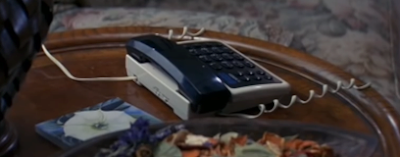
The second shot starts off
as a sound bridge that has been carried on from the previous shot, which consists
of a diegetic sound of a telephone, this is to represent the buildup of
suspense throughout the film. As it is the first object you see in the film it
further connotes the importance of this prop throughout so that the audience
can focus on who the mystery killer might be possibly through the voice. It is
also a close up shot and tells the audience it’s not going to be an ordinary
phone call, which already brings a tense atmosphere to the audience. It generates an
enigma code as it prompts the audience to figure out who the person ringing the
phone is, further creating social interaction through the use of the
gratification theory as the audience want to discuss who it might be and what’s
going to happen next. As well as that another theory used is the hypodermic
needle theory through the significant use of the ringing telephone. This is
because it allows the audience to relate to the fear of the phone ringing
because phones are used in everyday life, injecting ideas into the audience
that you never know whose calling their telephone.

This shot
is a pan up to a female character with a slow zoom to another close up this
creates intensity and makes the audience aware the character doesn’t know who
the person on the other line is through the use of facial expressions. As it is
a woman picking up a phone to someone she doesn’t know suggest she will be a
vulnerable character in the film and is a stereo type of a typical blonde woman.
The use of the close up is also used to show how the characters facial
expressions change throughout the phone call as she starts to realise the other
person on the phone is calling to harass her. At first she acts flirtatious,
ditzy and plays along with the caller’s game which is a typical convention of a
woman in a horror film. Films such as ‘I know what you did last summer’ can
relate to this. The background lighting is specifically quite bright to connote
her emotions being happy at this time. The black phone has dark connotations to
portray the evilness of the killer which contrasts with the victim’s fair face
to represent her innocence and purity.

The next shot is
another close up, however the composition of the shoot is in a place where you
can see behind the character and outside the window. This creates anxiety as it
looks like someone or something will appear in the door window. Also as it is
dark outside and it is a conventional aspect of a horror film. The character
also appears to have their back to the window which could suggest someone will
jump out behind them as it is a common scene in a typical horror film. This
links to the film ‘the woman in black’ when the ghost woman suddenly appears
behind the window demonstrating how this feature is used in many horror films
because it entertains people in the way they want to which is a use of the
gratification theory. This also gives me an inspiration for my production as
when people go to see a horror film they are looking for a sense of fright which
further brings forward the audience theory that the target audience for scream
is people
looking for an adrenaline rush of scariness.

The next
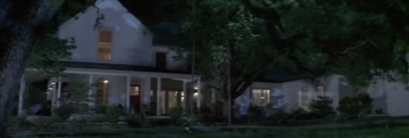
shot is a pan down from a tree to a wide shot of outside the house. The tree is
a convenient shot as later on in the scene the female victim is hung from one
of its branches by the killer. The director has used this shot as an
opportunity to inject ideas into the audience which is a clear use of the
hypodermic needle theory, this is to foreshadow the later event of deaths. Other
films have used trees as a sign of death such as ‘the conjuring’ and can be
effective because it is a common trope of ghost stories so the audience can
guess what’s coming. The pan down is to show a clear shot
of the swing that appears to be slightly swinging forwards and backwards. This
brings the theme of supernatural to the film. This is effective because it also
creates the theme of mystery, that someone must be by the house-possibly the
caller- this is to keep the audience guessing and make them want to watch more.
The white house contrasts with the dark lighting in the background to portray
the theory of binary oppositions between the innocence of the victim and the
evilness of the killer. The natural sounds of outside create tension as the
killer is not seen or heard.

The next shot is
a close up of a lit up cooker this is so the audience can see the victim is
about to make popcorn. This is significant as popcorn is a typical snack for a
film suggesting that something thrilling is about to happen. The camera pans up
into a medium shot, meanwhile the phone rings for the third time and the victim
is seen moving away from the popcorn to answer the call. This suggests bad
things will begin to occur as she is leaving the cooker unattended, which is
the start of the disequilibrium. This is followed by next shot which consists
of the victim still on the phone being playful, not knowing that the killer is
on the phone. The fact the victim is playing with a knife whilst on the phone
to the killer creates the idea of irony because she is later killed by him with
a knife. The director has cleverly used this to foreshadow the later events.
Which is effective because it gives away clues to the audience to create a
sense of fear as they may know she will be killed.

The camera
follows the female back to the living room where the call continues meanwhile
the camera has several jump cuts between the character and the popcorn and each
time the popcorn is bigger and bigger. This is to build tension of the big
event that is about to take place. The popcorn symbolises the heat rising
between the victim and the caller as she stats to realise he is playing with
her mind. The reflection of light on the foil of the popcorn connotes the shiny
surface of the knife the victims are later stabbed by, to instill to the
audience a horrifying event is about to happen. The fact that the victim has
now switched to a white phone contrasts with the previous black phone, as this
is now cordless to portray the innocent trying to run away. As the colour white
usually represents innocence and the colour black usually represents death and
horror.
The black phone portrays the killer trying to catch the
victim. This is conventional to a horror film and is used to have a fast paced
event to suggest how quickly the deaths occur. The whole of the opening
sequence is compelling to the audience so they can immediately gain interest
and are apprehensive about whats going to happen next. This aggressively keeps
the audinece guessing, which is a common convention in many horror films such
as ‘the gift’. Making this horror film effective becayse it makes the audience
want to watch more.